Don’t wait on brakes. A.H. Autocare is the convenient way to fix yours fast.
Even if you aren't sure what's wrong, we do a thorough inspection on arrival and won't start work until you approve a quote specific to the needs of your vehicle.

Type in your postcode and discover a qualified mobile mechanic near you now!

We are able to work on a wide range range of popular makes and models

Even if you don't know what's wrong, we'll come to you, inspect your vehicle and supply a quote upfront.

Tell us where your car is and our qualified mechanic will be with you soon.
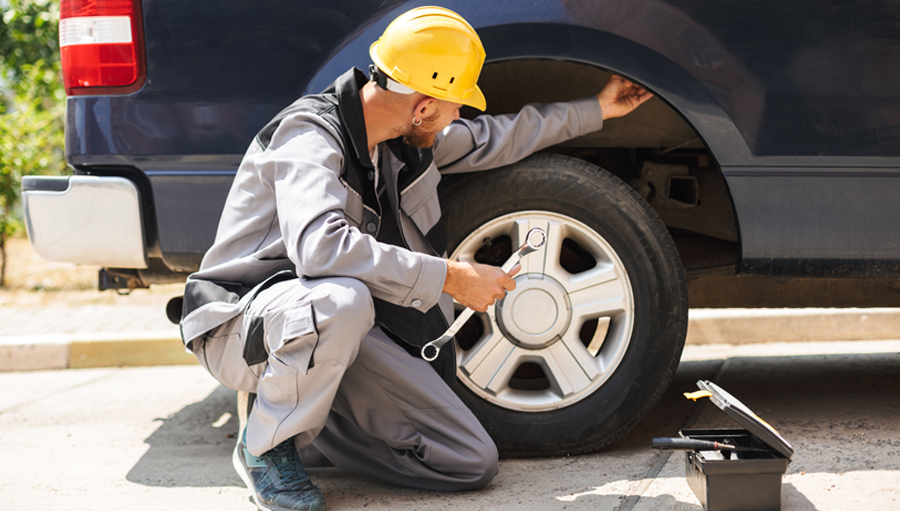

A brake pad on it’s own is not expensive, costing between $50 to $100. However, once your brake pads have failed, which is quite common, you must consider changing other parts of your braking system including the brake caliper, brake drums, brake line/hose, brake shoes, disc rotors, wheel cylinders, master cylinder or wheel hub bearing which may be worn. The price of these components will largely depend on the make and model of your car and the overall condition of your braking system.
In instances where a foreign object gets caught inside a brake caliper or there’s dust or moisture between the brake pad and brake rotor disc, our mechanics can perform minor repairs to get them fixed. In all cases, our mechanics will inspect your vehicle and provide you with an itemised quote before we start any work. Got questions? Ask us. Our friendly team is here to help!
Anti‑lock brakes, or ABS, are a safety system designed to prevent your wheels from locking up during heavy or emergency braking. When a wheel locks, the tyre loses traction and the car can skid, making it harder to steer.
ABS helps maintain steering control by rapidly applying and releasing brake pressure to each wheel — much faster and more precisely than a driver could. Wheel‑speed sensors detect when a wheel is about to lock. The ABS control unit then pulses the brakes to keep the wheels turning just enough to maintain grip with the road.
During ABS activation, you may feel the brake pedal vibrate or pulse — this is completely normal, and you should continue to press the pedal firmly. ABS doesn’t necessarily shorten stopping distances on all surfaces, but its primary benefit is keeping the vehicle stable and steerable so you can avoid hazards safely. In Australia, all new cars must be equipped with ABS as a standard safety feature.
It is difficult to predict the exact lifespan of brake pads as their longevity depends on factors such as the user’s driving style, the material of the pads, the driving terrain and the maintenance of the braking system. Also, your car’s front brake pads wear out sooner as the vehicle tends to dive forward when brakes are applied.
On average, most brake pads can function anywhere between 25,000-65,000 miles. In some rare instances, they can last about 80,000 miles as well.
There are several common signs that may indicate your brake pads need replacing:
Squeaking or squealing noises
The next time you place your foot on the brake pedal and you hear a squealing noise, chances are your brake pads are wearing out. This sound can be caused due to several other reasons as well. When the brake pads are worn out and the metal backing plates inside come in contact with the brake rotor, you’d hear a grinding sound. If you still delay in getting a replacement, the brake pads will crumble down further and the increased friction will damage the rotor as well.
Also, brake pads start accumulating a lot of dust and dirt on the disc rotor, resulting in squealing every time you apply the brakes. You may also hear a thumping noise when something gets stuck in your caliper unit, or if there’s lack of lubrication in the rear drum brakes.
Longer stopping distances or reduced braking power
If your brakes aren’t responding quickly in an emergency and they fail to act until the brake pedal is almost touching the floor, you may want to get your brake pads checked. If your brake pedal feels spongy or squishy there might be moisture in the brake fluid which other than reducing braking efficiency can corrode brake components and result in total brake failure. On the contrary, if your brake pedal feels hard and you have to apply immense pressure to make it function, you may be experiencing power brake issues, restricted hydraulic lines, frozen calipers or damaged brake linings.
Brake warning light on
The indicator light on your dashboard can warn you when something is wrong with your car’s brake pads. However, the warning light does not necessarily mean that the brake pads are at fault, it can also highlight other issues affecting the braking system, say, for example, a situation of low brake oil or leaking brake fluid. But in either case, you should have your car checked out by an expert immediately.
A burning odour
Overheated brakes or clutch can result in a distinct, chemical odour when you repeatedly apply brakes while driving. You may also experience a strong smell after you’ve installed new brake pads, this is usually harmless and you need not stress over it. Another possible situation could be that you’ve accidentally left your parking brake on. The friction caused while driving with the parking brake on will cause it to overheat and result in a burning smell.
Vibrating steering wheel or pulsating brake pedal
Does your car shake when braking? A pulsating sensation while braking mostly results out of warped rotors but sometimes, unevenly worn pads are to be blamed as well. When an uneven rotor surface hits the brake pad while spinning, some of the pad material is transferred onto the rotor. You’ll feel a vibration when the pad hits that bump on the rotor. Usually, when you feel a shudder through the steering wheel, the front rotors need to be looked at and if the pulsation is through the brake pedal, the rear brake rotors might need a fix.
Car pulls to one side while braking
Your vehicle may tilt sideways if the fault lies in the brake system. So, if your brake pad or shoe is contaminated with grease or fluid or your car has a leaking wheel cylinder and even issues arising from a frozen caliper or wheel cylinder piston – a preliminary check from our mechanic can help you locate the source of the problem.
Years of experience in car servicing, brake repairs, suspension, and inspections. We provide high-quality automotive services with transparent pricing.
© 2026 A.H. Autocare. All Rights Reserved.